If you’re not telling your story, someone else is!
Effective Marketing Strategies for Virtual Learning Programs
In the field of education, students, parents, and staff are constantly inundated with messaging in various ways. Particularly in the online space, everyone is competing in the attention economy, making it hard to stand out from the noise. However, the way we communicate our educational programs can truly make or break a student’s engagement and future success. With the rise of AI messaging and content creation, it is only getting harder to cut through the noise and become seen by your audience. When it comes to marketing your online school, it’s imperative to know how and where to be seen.
Since 2005, Indiana Online has set the standard for high-quality virtual learning in Indiana. Today, we bring that same expertise directly to schools and districts through our consulting services, making sure that your virtual learning model is optimized for your community. Whether you’re beginning at square one or strengthening an existing program, our team will help you design, implement, and optimize a virtual learning model that works for your students and your community. We deliver a wealth of knowledge from our network of national affiliations.
On April 24, 2026, we brought together our Advisory Committee, CIESC member school districts, and two marketing experts—Paul Weller, Director of Media Services, and Jenn Lisak Golding, CEO of Sapphire Strategy—to explore what it takes to market online schooling programs successfully in 2026. The panel led attendees through the foundations of narrative storytelling marketing, exploratory content, and tips for tailoring your marketing efforts to the current market landscape.
What Is Your Story?
Everybody has a story to tell, but how exactly do you claim control over the narrative? CIESC’s Director of Media Services, Paul Weller, provides a wealth of information on creative, planned storytelling through video. Weller is an award-winning video producer with over a decade of experience creating high-impact videos. Serving CIESC, Weller and his team produce over 100 videos per year, guiding the production cycle from pre-planning to delivery.
“If you’re not telling your story, someone else is,” Weller shared. This motto is embedded throughout the Media Services organization. The goal of the Media Services team is to help schools pull back the curtain and tell their stories—straight from the source. In fact, Weller empowers every school to create and promote their own content. Why? Creating your own media content gives you greater control over the public narrative and establishes pillars in your story.
How to Define Marketing Opportunities
Remember, this is your story, and you have the autonomy and creative freedom to promote a wide variety of themes. The first step to defining marketing opportunities is pinpointing your “why?” What exactly are you promoting? What do you want viewers to get out of your content? Marketing opportunities aren’t black and white; promotional opportunities live in the gray area, too. For example, marketing doesn’t have to look like tabling at planned events and conferences. Instead, it could look like a student testimonial. Some common topics schools cover include:
- FAQs
- Staff recruitment
- School history
- Personal success stories
Your audience may care about different things. Think of the meaningful conversations you have and what would matter to them.
Balancing Human vs. Institutional Content
One challenge to promoting a virtual program is the lack of a physical presence that represents your organization. To accommodate that, it’s important to lean into your online presence while still humanizing your brand. Be intentional regarding balancing both the organizational features of your program and the personal impact it’s made on the school district.
For example, sending a comprehensive list of all courses offered in the program may overwhelm your audience. Particularly, busy parents can often feel disconnected from their student’s school experience and or uncertain about which requirements need to be fulfilled. Consider what parents would really want to know about your program. Alternatively, promoting student and parent testimonials shows authentic success stories from your program. Another idea is to produce a short overview video of your program’s platform to promote ease of use and user-friendliness.
Audiences Will Vary on Each Platform
One mistake often overlooked in marketing is assuming your audience does not change across platforms. Each platform provides unique opportunities to connect with your audience. For instance, a short highlight reel may perform best on social media, whereas a full-length video will shine on your website. The fact of the matter is, people are going to use different platforms for different niches. Therefore, who you market your program to will vary on each platform. Based on Weller’s decade of experience working with school districts across Indiana, he segments the general audience into the following platforms:
- LinkedIn promotes professional insights, lessons, and behind-the-scenes of organizations
- Instagram invites aesthetic, curated, and clean visuals
- Facebook is great for promoting community stories
- Twitter/X welcomes opinions, hot takes, and trending conversation topics
- Email newsletters echo big picture successes, large-scale events, and general announcements
Strategic distribution extends the lifespan of your content and helps reach your community wherever they are most active.
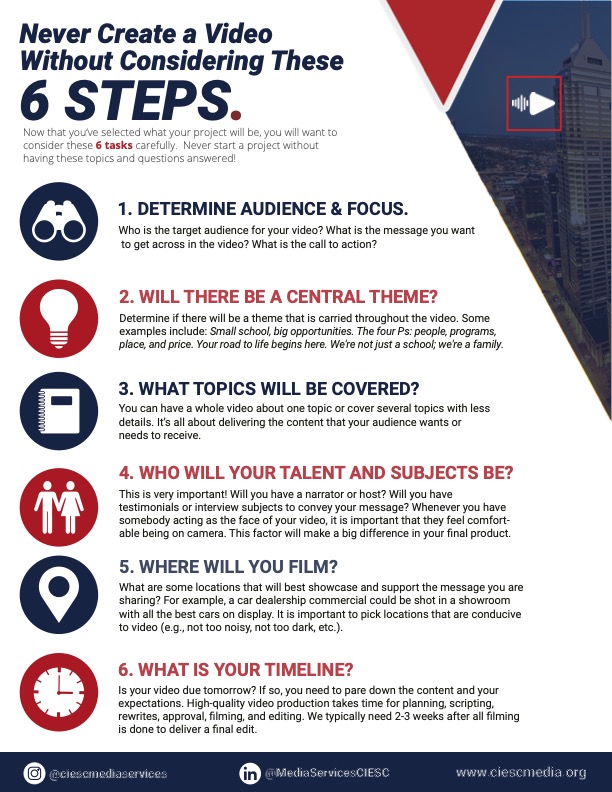
6 Steps to Take Before Video Production
Between YouTube, TikTok, and Instagram Reels, video is popping up just about everywhere, for good reason. Marketing videos are an engaging, evergreen tactic to promote your virtual program for years to come. With some preparation, you can define the goals of your video, improve the filming process, and ensure the final product resonates with your audience.
Here are six steps you can take to get started:
- Know your audience
- Determine the central theme
- Select the topics you’ll cover
- Identify talent and subjects to participate
- Find appropriate locations to film
- Map out your production timeline
Following these six steps will set the basis for a successful, stress-free production process. You will also ensure that your final video clearly and effectively communicates your message.
Consider Working with a Media Partner to Help Tell Your Story
Planning, filming, and producing your own marketing materials is quite a challenge. CIESC Media Services can help tell your story clearly and strategically. The Media Services team harnesses the magic of video production, allowing you to tailor it to your needs. Whether you’re interested in professional video production, photography, digital design, or consulting, Paul Weller can lead the way.
Heads up! CIESC members are granted free 48 hours with Media Services over a two-year period. Reach out today to learn more.
Understanding Marketing Messaging
While external communications—like video production—are great for promoting your virtual program, a strong internal branding and messaging foundation is equally as important. CEO of Sapphire Strategy, Jenn Lisak Golding, offers her insights on refining your message to engage the right audience.
Marketing is an umbrella term that gets thrown around in regular conversations with superintendents and administrators. For your marketing efforts to find success, it’s imperative that you understand three key aspects of your brand:
- Awareness is how you generate awareness surrounding your brand, attracting target personas
- Experience could be someone who has had direct exposure to your marketing through virtual or digital communications
- Personality is a reflection of values and how you show up with your brand
Messaging Establishes Brand Trust
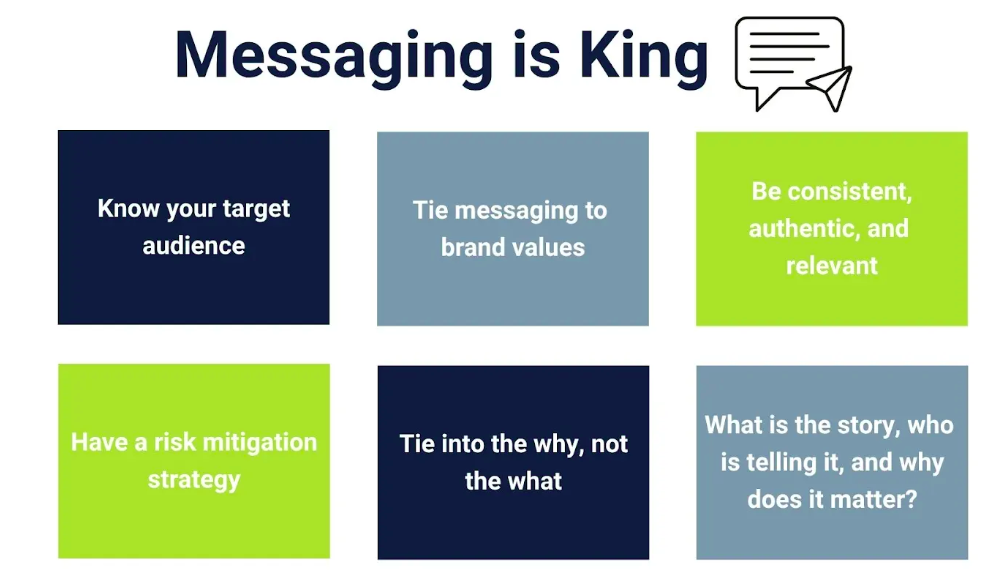
In the online space, there is a lot of noise—social media posts, AI-generated content. pop-up ads, cookie consent agreements, etc. It can be more difficult to hold your target audience’s attention, especially amid the excessive stimulation. This can cause online users to gloss over valuable information or ignore certain messages. In the age of AI, many users are skeptical of its validity, making it more challenging to earn their trust. What exactly is the solution to this user uncertainty? Authentic messaging. Your messaging is king!
Here are some guidelines to develop and solidify your messaging:
- Be clear and concise
- Know your target audience and your overall marketing goals before building a strategy
- Tie your messaging back to your brand values
- Be consistent, authentic, and relevant
- Enforce a risk mitigation strategy for content review
- Be mindful of your storyline; Who is telling it, and why does it matter?
- Many people buy into the “why” behind your marketing, not the “what”
Less is More
When marketing your online schooling program, keep it simple; less is more. You don’t need to engage in every traditional marketing tactic. Narrow your focus through experimentation. Whatever tactics drive a return are the ones to drill into. Generally, it’s best to start by identifying your target audience and stakeholders—think parents and guardians, your school district, or even the Indiana Department of Education. From there, you can establish your business goals to tie them back to your marketing objectives.
Marketing Tactics to Consider
Once you have established your “why” and your core messaging, it is time to choose the vehicles that will carry that message to your community. In 2026, the most successful online schooling programs aren’t just “blasting” information; they are creating pathways for families to find them naturally.
Here are four high-impact tactics to integrate into your strategy:
Establish a Consistent Social Media Presence:
In 2026, parents and students aren’t just using Google; they are searching on TikTok, Instagram, Facebook, and even via AI assistants like Gemini or ChatGPT. Ensure your program’s core values and FAQs are reflected in your social media captions and video descriptions, not just your website’s pages.
Create an Email Marketing Funnel
Not sure how to launch your email marketing? Start with a simple, automated follow-up sequence. When a parent requests information, they should receive an instant introductory email followed by a series of 2–3 short testimonials over the next week. More importantly, remember that each email should be clear, concise, and always end with a call to action. This keeps your program top of mind during their decision-making process. The major benefit of email marketing is that you land directly in their inbox. From there, the recipient must make a decision (whether that is open, click, unsubscribe, or delete).
Publish AEO and SEO Targeted Content
We aren’t just “writing for Google” anymore. We’re now playing in the world of AEO (AI engine optimization) in addition to SEO (search engine optimization). Think about it: when a parent asks an AI assistant for the “best online schools in Indiana,” you want your program to be the answer it gives.
To make that happen, you need a “pillar” piece of content on your site. We’re talking a deep dive—3,000+ words—that acts as the definitive guide to your program. It’s a bit of a marathon to write, but it’s worth it. This piece should weave together:
- The big “why” behind online education today
- The nuts and bolts of how your specific program works
- Plenty of shout-outs to your school by name
- Real-life success stories and quotes from your students and parents
By creating this comprehensive resource, you’re essentially feeding AI models and search engines the high-quality info they need to trust (and recommend) your online schooling program.
Tap Into Direct Mailing or Paid Advertising
It might sound surprising, but “old school” is making a serious comeback. Because our digital lives are so cluttered, physical mail actually gets noticed again. There’s something to be said for a parent holding a high-quality postcard in their hands. If you use a great photo, a clear “why us” message, and a QR code, you can drive traffic to your site and track exactly who’s interested.
On the flip side, if you want to get in front of people fast, Meta (Facebook and Instagram) ads are still your best friend for targeting specific local families. If you’re feeling ambitious and have the budget, you can even look into Hulu’s self-service platform to run your own commercials on streaming TV.
Implement Create Campaign Calendars Annually
The biggest mistake schools make is being reactive with their marketing. Instead of scrambling to post something because it’s enrollment week, try creating a campaign calendar for the entire year.
When you look at your year as a whole, you can see the big picture. It helps you spot quiet zones where you might need to ramp up engagement, and it ensures you’re planning for big projects—like videos or mailers—months before you actually need them. A calendar takes the guesswork out of the process and keeps your message consistent all year long—with ample time to prepare for what’s next.
Need a Hand? Consult with Indiana Online
Building a robust marketing machine and a high-quality virtual program simultaneously is a heavy lift. If you’re looking for a partner to help you navigate the “red tape,” streamline your technology, or just audit what you’ve already built, Indiana Online Consulting has your back.
As the state’s largest non-profit online course provider, Indiana Online comprises experts who reinvest in Indiana education. Here’s how we can help:
- Building from Scratch: Consulting from concept to launch to ensure you start on the right foot
- Optimizing Existing Programs: Auditing your current content, teaching methods, technology, and operations to see where you can improve
- Selection & Strategy: Helping you choose the right online solutions and ensuring your program stays compliant and accredited
Whether you’re ready to launch or just need help brainstorming your next move, reach out to the Indiana Online team. They can help you design a virtual learning model that actually works for your students and fits your budget.
Click here to explore consulting packages and reach out for further assistance.